Aquaponics, hydroponics, aeroponics: what are the differences?
These three soilless growing techniques are often confused. What separates them is not yield per square metre, but their relationship to the growing medium and the way nutrients reach the roots.
Three names come up again and again as soon as soilless growing is mentioned: hydroponics, aeroponics and aquaponics. They look like close relatives, but they are in fact very different techniques. This article sets out what really separates them, and how to make your choice if you want to start growing without soil.
Three techniques, one starting point
All three share a single principle: growing without soil. The plant no longer draws its nutrients from the ground. They are delivered straight to the roots. That is what makes it possible to grow away from rich, fertile land: in a shed, in a greenhouse, in a high-rise building, on a brownfield site or on poor soil.
This approach also allows very precise control over the nutrients the plant receives and over growing conditions. Production is optimised as a result, and harvesting can run all year round when the crops are well managed.
What sets these three growing methods apart is where the nutrients come from and the form in which water reaches the roots.
Hydroponics: a nutrient solution you buy
In hydroponics, the roots sit in water enriched with mineral salts and various nutrients, supported by an inert growing medium irrigated continuously. The grower buys the fertiliser, doses the solution, monitors pH and conductivity, and manages the whole thing to the gram.
It is the most widespread technique in commercial greenhouse market gardening, because it is the most predictable. The grower knows exactly what is being applied, corrects quickly, and yields stay stable. Hydroponics is also the easiest system to automate.
It does have one weakness, and it shows up in the accounts. Fertilisation is a permanent purchase line, indexed to raw material prices, which themselves depend on gas and imported phosphate. A hydroponic greenhouse is also limited to a single output, the crop.
Aeroponics: roots suspended in the air
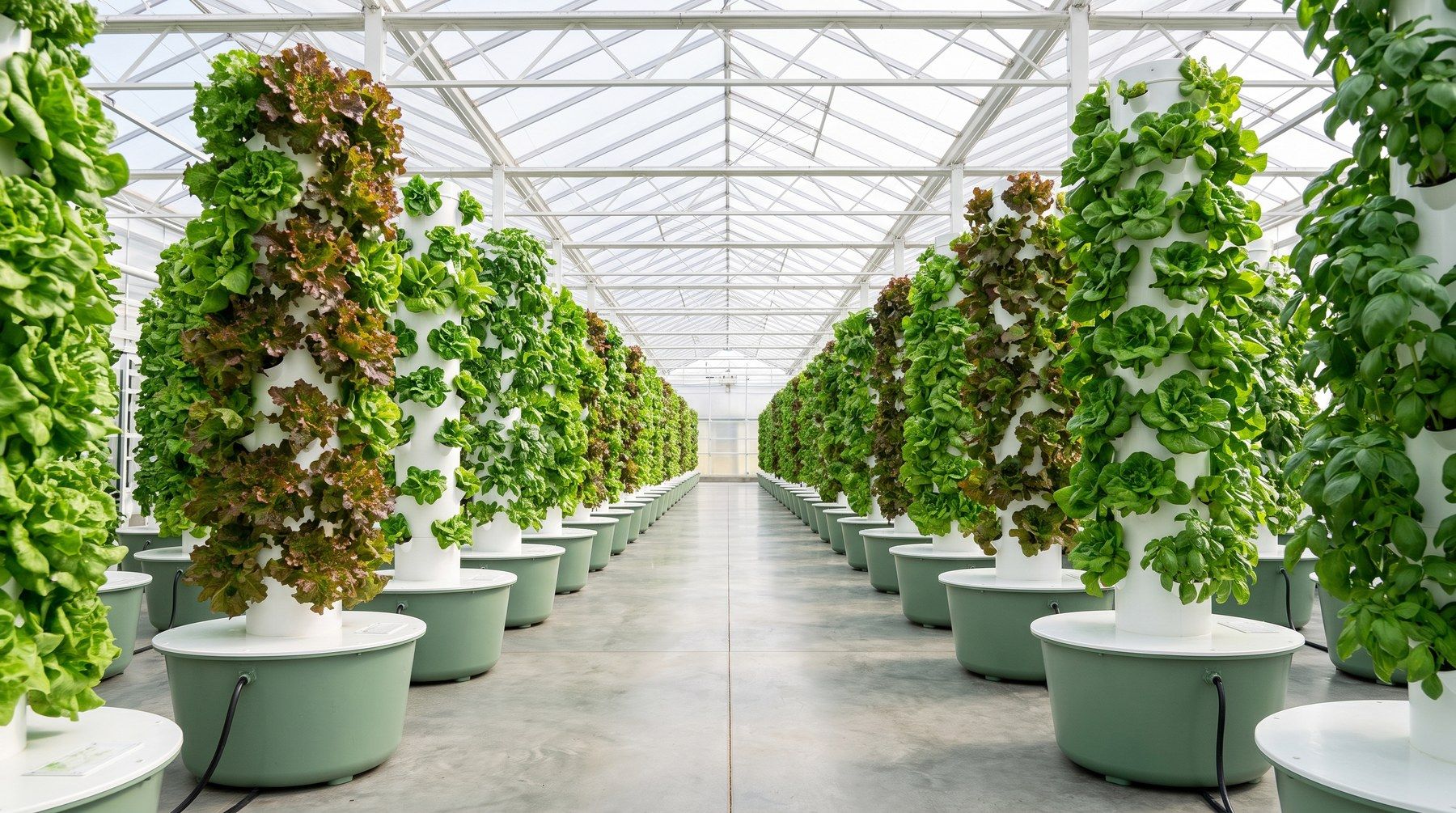
In aeroponics, the roots hang in a closed chamber and receive a nutrient mist sprayed at regular intervals. Oxygenation is at its highest, growth is often faster, and water use is very low.
The technique is impressive, but it is fragile. A pump or nozzle failure lasting a few hours is enough to dry out a root system with no reserve around it. It therefore demands costly electrical and mechanical redundancy.
It still makes a great deal of sense for short-cycle, high-value crops with fast turnover, such as herbs and salad leaves. On heavier crops, fruit grown over long cycles, it proves far less attractive. And like hydroponics, it yields only one kind of product.
Aquaponics: the nutrients come from the fish
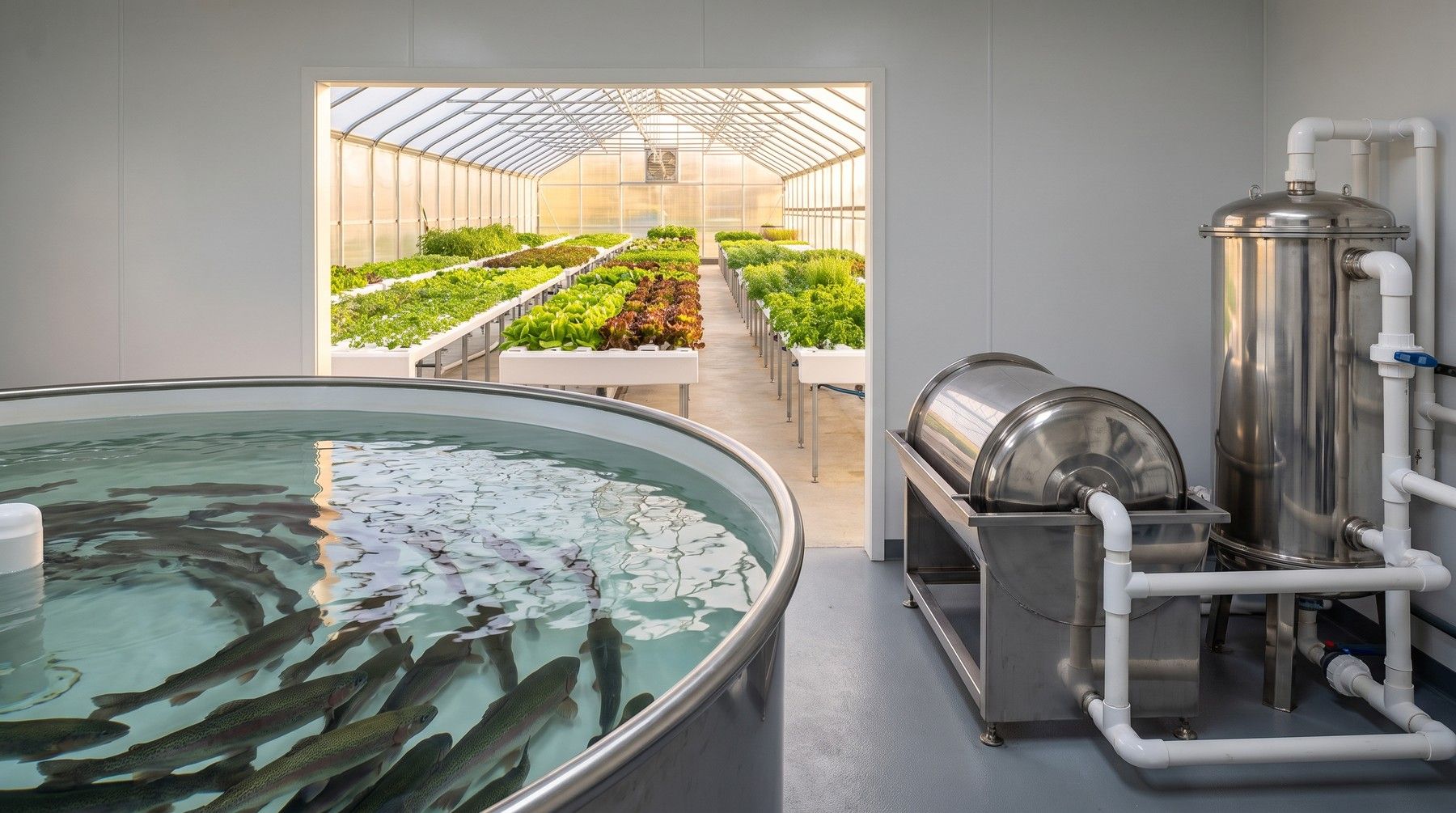
The word itself says most of it. Aquaponics is built from two terms, aquaculture and hydroponics. The technique adds aquatic farming to soilless growing, fish or shellfish, whose waste becomes the plants' fertiliser.
The mechanism relies on a long-established biological reaction, the nitrogen cycle, which we cover in detail in How does aquaponics work?. The fish release ammonia, toxic to them above a few milligrams per litre. Two families of bacteria then act in turn, the Nitrosomonas, which convert that ammonia into nitrites, then the Nitrobacter, which turn those nitrites into nitrates. And nitrates are precisely the form of nitrogen that plants take up best. By consuming them, the plants clean the water, which then returns to the tanks. The loop closes on itself and forms a genuine virtuous circle.
These bacteria do not settle in on their own. It takes several weeks to build a stable population, a step growers call cycling, before the system can gradually be stocked with fish and then plants.
That does not make fertilisation entirely free. An aquaponic loop is still prone to a few deficiencies, iron above all, which the pH of the water makes hard for the plant to take up. Supplements that are soluble and harmless to the fish are therefore added from time to time, chelated iron first among them. These inputs stay marginal next to the cost of the complete fertilisers a hydroponic system requires.
Aquaponics does not swap one fertiliser for another. It produces the fertiliser on site, from a feed that already generates a second product.
The economics lie exactly in this coupling of two forms of farming, which together make a third. Fish feed replaces fertiliser, but it does not only feed the plants. Above all it produces fish, which are then slaughtered, processed and sold. The same euro, spent on fertiliser in a hydroponic or aeroponic greenhouse, is spent here on fish feed and generates two revenue streams.
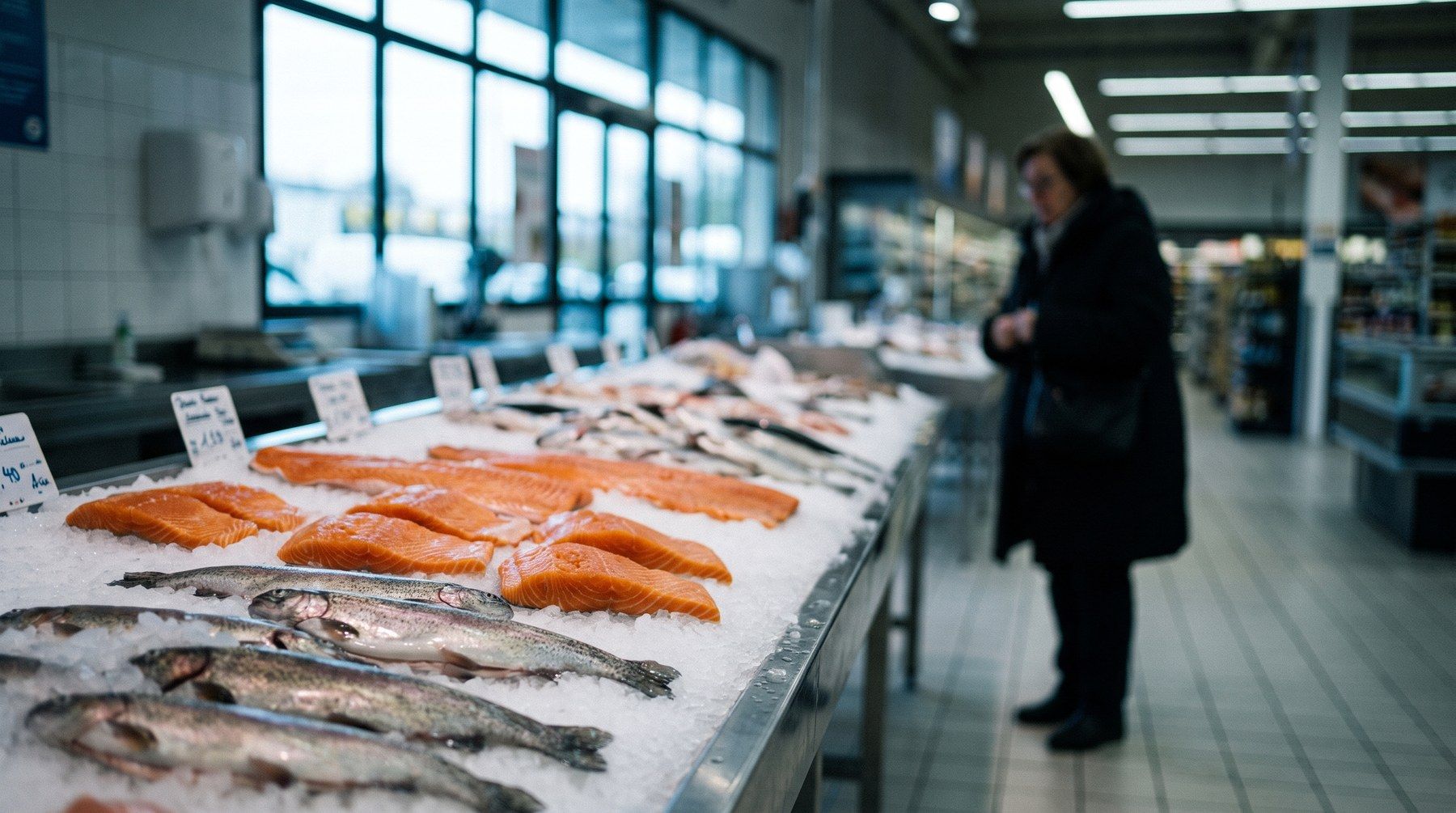
On top of that comes a separate route to market. Market gardening and fish farming do not sell into the same aisles, do not follow the same price cycles and do not depend on the same buyers. An aquaponic farm therefore spreads its commercial risk at the same time as it diversifies its production.
Comparing the three growing techniques
Comparing the three methods in terms of where the nutrients come from, hydroponics and aeroponics buy their fertility as fertiliser, while aquaponics produces it directly inside its own loop.
On revenue, the first two techniques generate only one stream, from the crop. Aquaponics offers several: fish production, vegetable production and, if the farm invests in one, a processing unit that adds value to both.
On biological complexity, the ranking is clearly reversed. Aquaponics is by far the most demanding of the three, since it means keeping a three-tier ecosystem in balance, the fish, the bacteria and the plants, each with its own needs.
On resilience, it takes the lead again. Because the water circulates in a closed loop, an aquaponic farm achieves water savings of around 95% compared with open-field growing. The volume of water in the tanks also provides considerable thermal and chemical inertia, which absorbs shocks and leaves time to react. Aeroponics, by contrast, forgives nothing: a root system suspended in air has no reserve around it.
That leaves start-up speed, where aquaponics is the slowest. A hydroponic greenhouse produces from its first crop, whereas an aquaponic loop needs several weeks of commissioning before it can take its first stock.
What aquaponics rules out
In hydroponics and aeroponics, an imbalance, a disease or a pest attack can still be corrected with a chemical treatment. In aquaponics that is simply impossible. A synthetic pesticide or an antibiotic would destroy the nitrifying bacteria or the fish, that is to say the very heart of the system.
Crop protection therefore rests entirely on biological methods: releasing beneficial insects, managing the climate under cover and monitoring populations daily. Production is thus free of pesticides and antibiotics, which places it at the heart of what is expected from sustainable farming.
A technician may well experience this constraint as a handicap. For others it is a genuine guarantee of product quality, that of a crop no synthetic treatment has ever touched. It is an argument that pays off directly on the shelf and in retailers' specifications, and it explains how an agronomic constraint became a commercial asset.
Which is the most profitable?
Compared per square metre of growing area, the three techniques give comparable yields for the same species, and aeroponics can even come out ahead on the shortest cycles.
In terms of infrastructure and equipment, aquaponics is more complex to design and build. It does, however, pay back faster, because the same buildings and the same networks are written off against a double output, including fish, whose value per kilogram is far above that of vegetables.
The fertiliser line disappears from the operating account, but it does not simply evaporate. It is replaced by the feed line, a very real cost whose price moves with raw materials. Aquaponics also needs more electricity, for pumps, aeration, filtration and the cooling of some tanks, which makes it more sensitive to energy prices.
Its start-up, finally, is slower and harder to manage. But once a farm reaches cruising speed, the economics of aquaponics become clearly more attractive than those of the other two techniques, as we set out in Why invest in aquaponics in 2026?.
What about home growers?
Our own project is commercial aquaponics, run at scale. It is nonetheless entirely possible, and very rewarding, to take up home aquaponics, at your own place, to reconnect with growing your own food and gain self-sufficiency.
The results are often satisfying and the gardening experience is unlike any other, to the point of becoming a real passion. It does call for a certain rigour, and a basic understanding of how to size and then maintain an aquaponic system.
If the subject interests you, we have developed a companion brand, Univers Aquaponie, where anyone can find a greenhouse, a complete kit, individual components and the consumables needed to start their own production.
From the opening of the farm in 2027, we also intend to make certain equipment and consumables available to the general public, sold on the Univers Aquaponie site at very competitive prices, because we buy them by the tonne for our large-scale farm project. That will apply in particular to fish feed, and to some of the fertilisers used in aquaponics.
So which technique should you choose?
The answer depends above all on the project. For crop production that is simple to run and quick to start, hydroponics remains the most rational route. For very short cycles with high rotation, aeroponics delivers remarkable performance, at the cost of a technical fragility you have to accept.
For a farm that wants to produce more, diversify its outlets and end its dependence on synthetic fertilisers, aquaponics is the only one of the three that meets all three goals. In return it demands genuine biological know-how, a patient start-up and rigorous management.
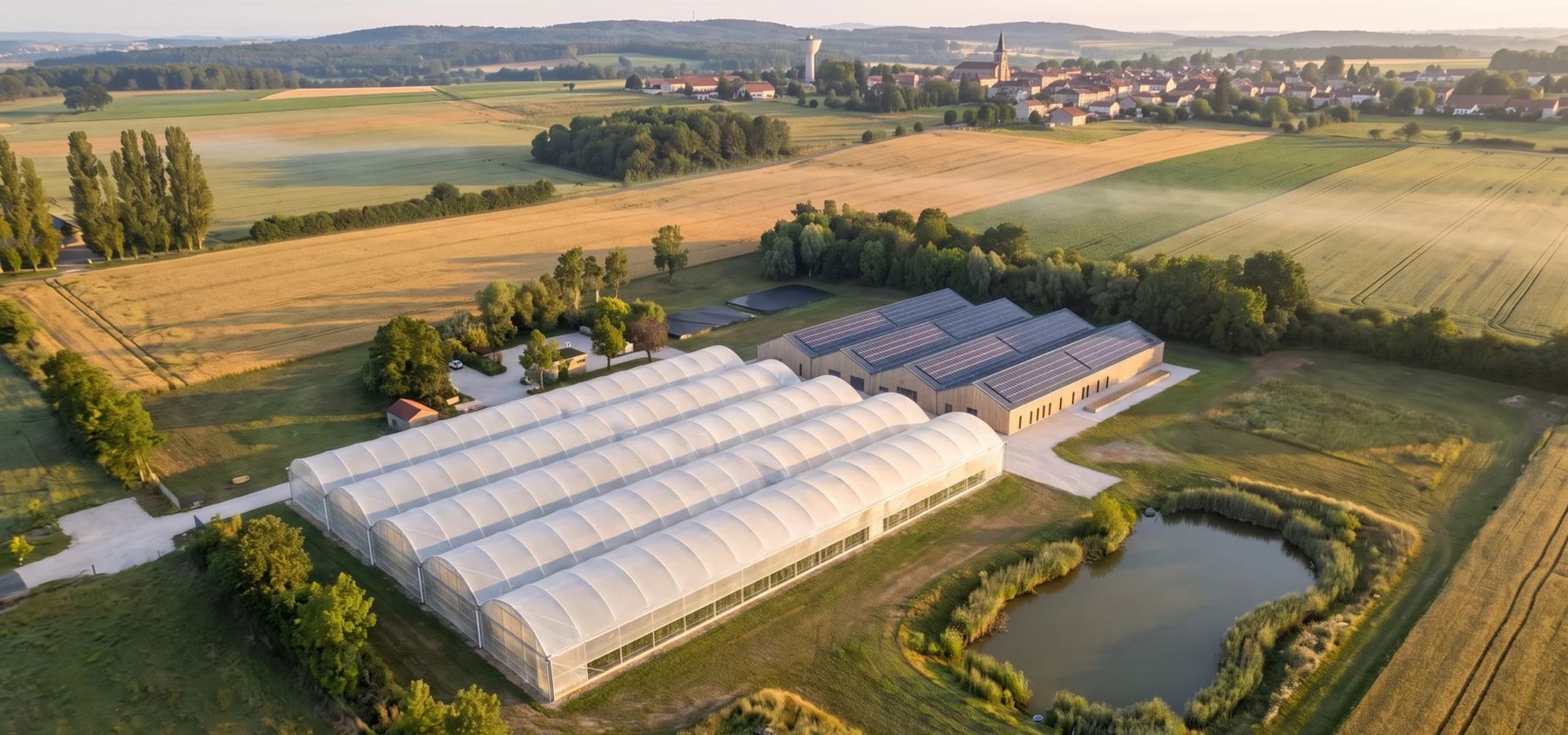
That is the bet we have made in Vic-sur-Seille, in the Moselle, in north-eastern France, with a one-hectare large-scale aquaponic farm due to open at the end of a construction phase starting in 2027. We will rear rainbow trout and brook trout alongside soilless market gardening, for local production sold through short supply chains, within a hundred kilometres across Lorraine and the Grand Est. The project is the subject of a fundraising round open to private investors, in support of food sovereignty and the agricultural transition.
See what our farm will look like→
Frequently asked questions
What is the difference between aquaponics and hydroponics?
In hydroponics, nutrients are bought as fertiliser and dosed into the water. In aquaponics, they are produced on site by the fish and converted by bacteria. Aquaponics therefore adds a saleable output and removes a purchase line, in exchange for a more delicate biological balance.
Is aeroponics more productive than aquaponics?
On short-cycle crops such as lettuce or baby leaf, aeroponics can grow faster. But it yields only one kind of product and copes very badly with breakdowns, as the roots have no water reserve around them. On a farm scale, aquaponics remains the more solid economic proposition.
Can you use pesticides in aquaponics?
No. A synthetic pesticide or an antibiotic would destroy the nitrifying bacteria or the fish in the loop. It is a hard technical constraint, and one that turns into a selling point with retailers and consumers.
Which of the three uses the least water?
All three use very little compared with open-field growing, since the water circulates in a closed or semi-closed loop. Aeroponics shows the lowest volumes in absolute terms, while aquaponics makes up for it with greater inertia, which leaves it less exposed to incidents.
How long does it take for an aquaponic system to become productive?
It takes several weeks to establish a stable bacterial population, a step known as cycling, before the system can be stocked with fish and plants. A hydroponic greenhouse produces from its very first crop, which is why aquaponics starts up more slowly.