Drought and water restrictions,
how will French agriculture adapt?
The heatwaves of 2026 cost French market gardening a quarter of its harvest. Here is what that drought changed for vegetable and fish production, and why aquaponics answers both difficulties.
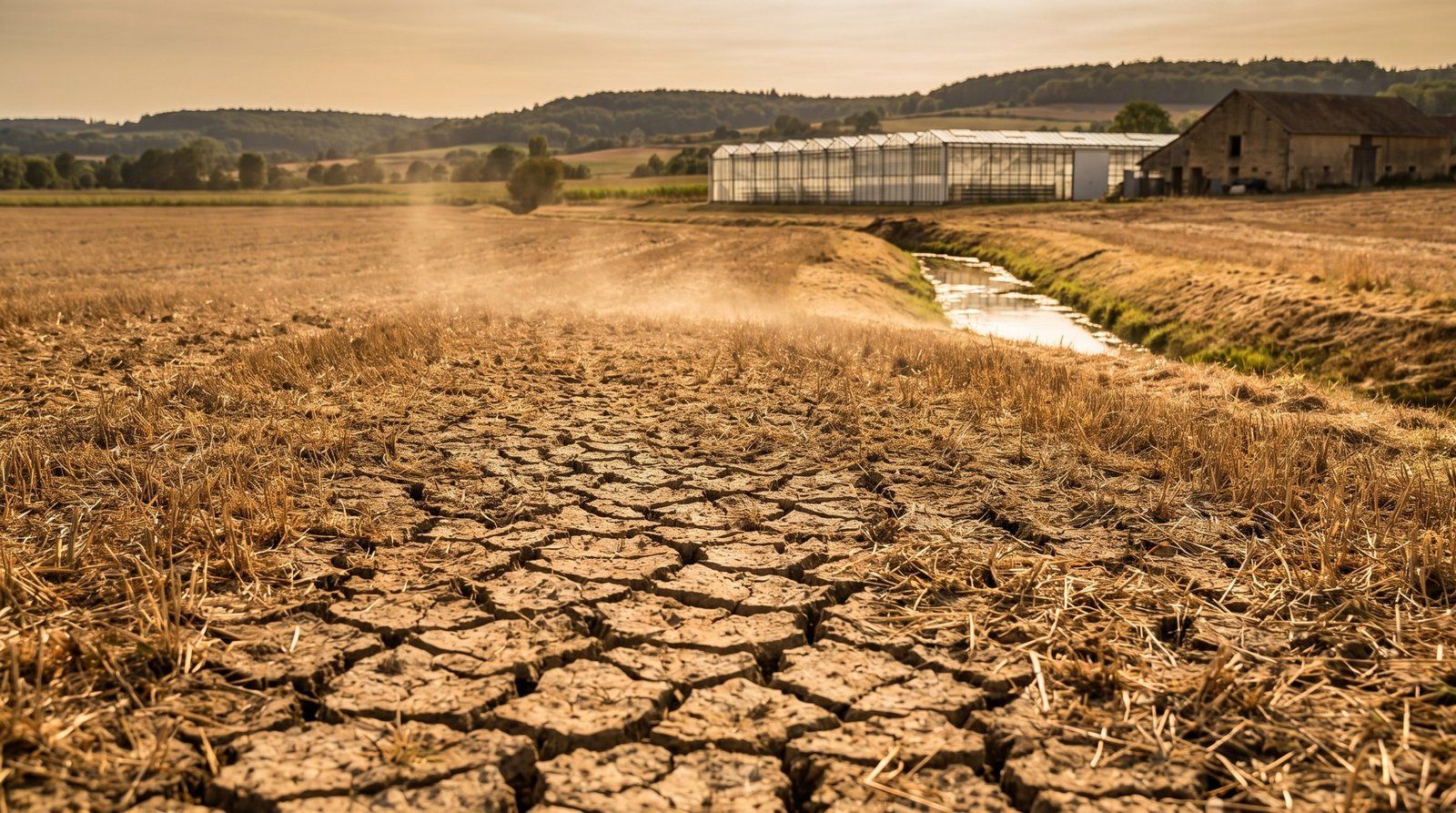
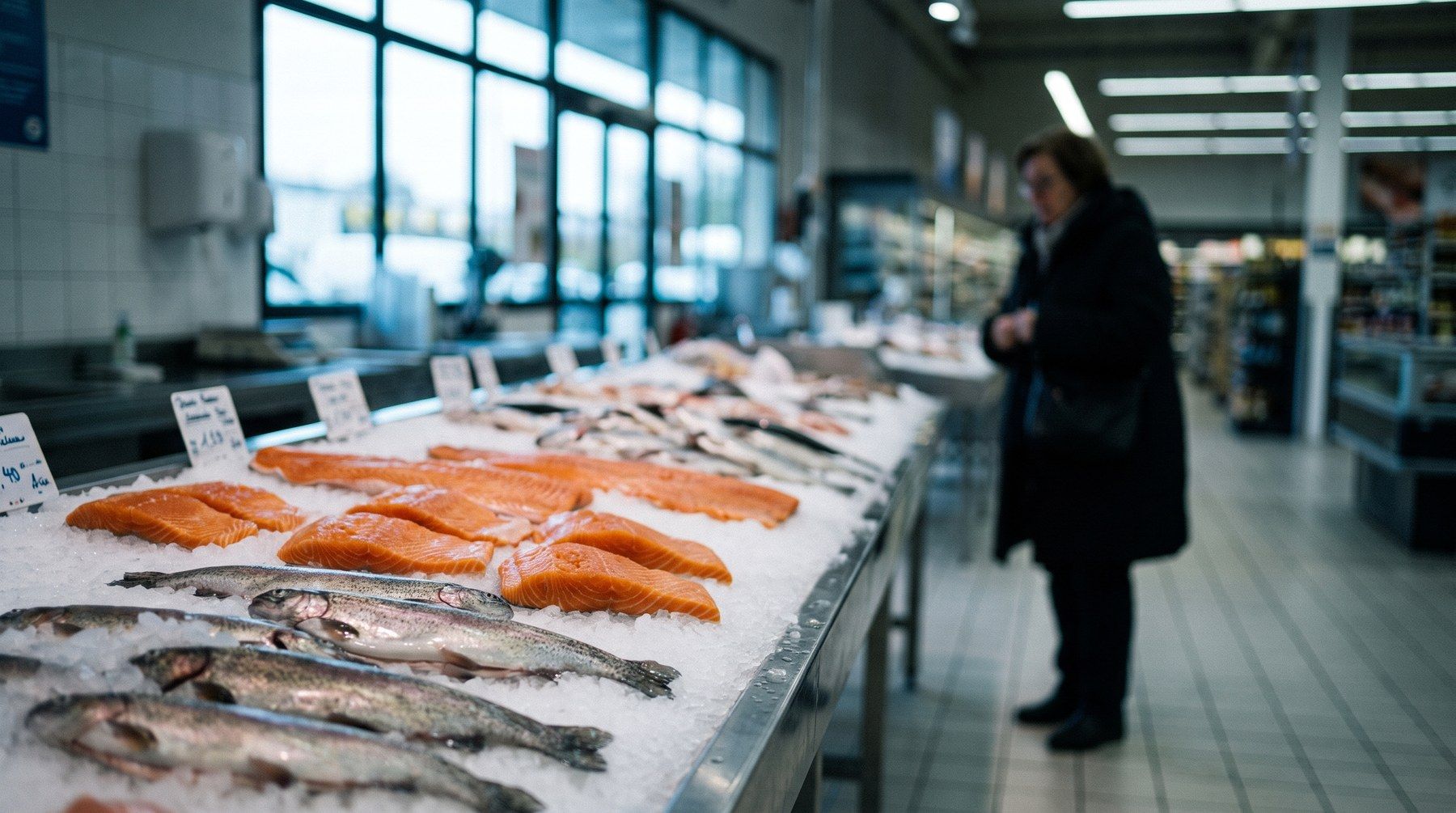
The drought of 2026 struck the whole of agriculture, yet it did not strike everywhere in the same way. The crops that fill our plates every day, namely fresh vegetables and fish, are among the most exposed, because they require water continuously and cope very badly with heat. In this article you will find what the heatwaves cost vegetable production and fish farming, and then the reasons why protected, closed-loop growing answers both.
A dry and scorching summer in 2026, in France as across Europe
July 2026 ranked as the third driest July measured in mainland France since 1959, and soil moisture there reached levels that Météo-France had never recorded. By the middle of August, ninety-two departments were subject to water use restrictions, and more than seventy had reached the crisis threshold, compared with forty-six in 2025.
The rest of the continent went through the same sequence. Spain recorded its driest July ever measured, the hunger stones reappeared in the bed of the Elbe in Germany, and several major European rivers fell to historically low levels.
The rainfall deficit alone does not explain the scale of the damage. Temperatures in 2026 clearly exceeded those of comparable episodes, and that heat accelerated the evaporation of the water held in soils and in plants alike. For an equal rainfall deficit, heat therefore aggravates agricultural drought considerably.
What the heatwaves cost vegetable production
The Légumes de France federation described 2026 as a catastrophic year for French market gardening, and it estimated production losses at between 25% and 30% at the end of the summer's three heatwaves. Those losses are counted in thousands of tonnes and in tens of millions of euros.
The breakdown by species gives a truer idea of what growers went through. The sector's first estimates report losses of 30% on strawberries, 50% on spring leeks and 70% on certain batches of lettuce and salad leaves. In tomatoes, the flowers burn and abort as soon as the temperature exceeds 35 degrees, which removes the harvest before it has even begun to form.
Retail prices followed, with a rise of around 32% on courgettes in a single year and of 31% on tomatoes. Such an increase does nothing at all for a grower who has nothing left to sell, and it reflects above all a national supply that has become insufficient, which imports step in to fill.
Why market gardening is the most exposed form of production
A fresh vegetable builds itself quickly and is lost just as quickly. Its cycle is short, its tissues are tender, and its commercial value rests on a size, a colour and a firmness that a few days at 38 degrees are enough to destroy. A lettuce that bolts will never again become a marketable lettuce.
The water requirement of these crops is moreover continuous, failing which the plant closes its stomata, stops growing and loses the size that determines its price. Market gardening therefore calls for water between June and August, that is to say precisely when prefectoral orders restrict its use.
One essential difference with arable farming remains. A cereal crop that fails can be made good in the following season, whereas a vegetable crop lost in July leaves a hole in July's supply. This is a direct question of food sovereignty, examined in Food sovereignty: where does France really stand?.
Fish farming runs into exactly the same difficulty
The heat does not stop at the riverbank. Salmonids are cold-water fish, whose physiological thresholds have long been documented. A rainbow trout stops feeding at around 19 degrees, enters distress between 23 and 24 degrees, and mortality becomes massive beyond 25 degrees.
To this constraint is added a mechanism that makes it worse. Warm water holds less dissolved oxygen, at the very time when the fish's metabolism speeds up and its needs increase. The deficit widens on both sides at once, which obliges fish farmers to run pumps and aerators continuously during heatwaves. Mortalities of several thousand trout were recorded this summer among our Belgian and Swiss neighbours.
Low water levels complete the picture. A watercourse that loses its flow warms up faster and dilutes less effectively, which penalises wild fish as much as flow-through farms. A traditional fish farm thus depends on two parameters over which it has no hold whatsoever, the temperature of the river and its flow.
At sea, the water is warming too and fish farming bears the brunt
The phenomenon is also reaching the coasts. The Mediterranean has seen one marine heatwave after another for several summers, the Bay of Biscay reached around 22 degrees at the surface at the end of June 2026, four degrees above the seasonal norms, and extreme marine heatwaves affected the North Sea and the Channel.
Farms set up in the open sea take the full force of this change, and salmonids are particularly ill-equipped for it. A salmon reared in a cage lives in water whose temperature and oxygen content no one controls, two parameters that deteriorate together as the sea warms.
Heat does not act alone, moreover. It comes on top of often mediocre rearing conditions, marked by high densities, by parasite pressure and by a real impact on the marine environment. This combination explains the steadily rising mortality rates recorded in recent years in the Norwegian industry, which is nevertheless the largest in the world.
This observation sheds light on an underlying trend, namely that salmonid production will have to adapt and that a growing share of it will move onshore, into systems where water temperature and quality are controlled. Giant facilities are not, for all that, the right answer. The Pure Salmon project, authorised in August 2026 at Le Verdon-sur-Mer, at the mouth of the Gironde, provides for fourteen hectares and ten thousand tonnes of salmon a year. Twenty-seven associations consider it disproportionate, and legal challenges have been announced.
A facility of that size belongs to industry far more than to farming, and that is the reason why we have chosen a human-scale model. We are convinced that rainbow trout and brook trout will be species of the future for French production, because aquaponics makes it possible to raise them onshore, in excellent conditions and at a scale compatible with the life of a local area.
Restrictions arrive at the most critical moment
The management of scarcity rests on prefectoral orders that grade water uses, from simple vigilance through to crisis. The department of the Moselle was thus placed on alert across its entire territory from 16 July to 31 August 2026, and three orders issued on the same day raised the upper Meuse and upper Moselle basins to crisis level.
Agricultural production is not treated like other uses. Market gardening, horticulture and protected crops most often figure among the priority crops, with adjusted irrigation time slots and the possibility of individual exemptions. These arrangements genuinely relieve growers, but they move watering around within the day without adding anything to the volume available.
This situation is set to recur rather than to fade. The Explore2 programme, conducted by INRAE and published at the end of 2025, projects a fall in low-water flows of around 15% for a France at 2.7 degrees of warming. As threshold flows are crossed earlier in the season, restrictions will be more frequent and longer.
What the conventional answers achieve, and where they stop
Crop management levers retain their full value. Sensor-driven drip irrigation, mulching, the shading of plots and more tolerant varieties reduce consumption and limit the damage, and many holdings already make use of them.
Securing a volume of water follows an altogether different logic, that of reservoirs and of the reuse of treated wastewater. Such works provide a welcome margin during a one-off deficit, but they do not create water, since they move a resource through time and depend on winter flows that are themselves set to decline.
There is a still more decisive limit. None of these techniques acts on temperature. An irrigated plot remains exposed to 38 degrees, and a better managed river remains a river that warms up. Yet heat is precisely what makes a tomato flower abort and a trout suffocate.
Part of the solution consists in leaving the open field
The year 2026 was a year of drought, of summer restrictions, of crops scorched by the sun and of degraded yields for farmers right across Europe. Producing somewhere other than in the open field and in open water is becoming a structural advantage, and that is what soilless production, protected under greenhouse cover, makes possible, in the service of farming that is resilient to climate change.
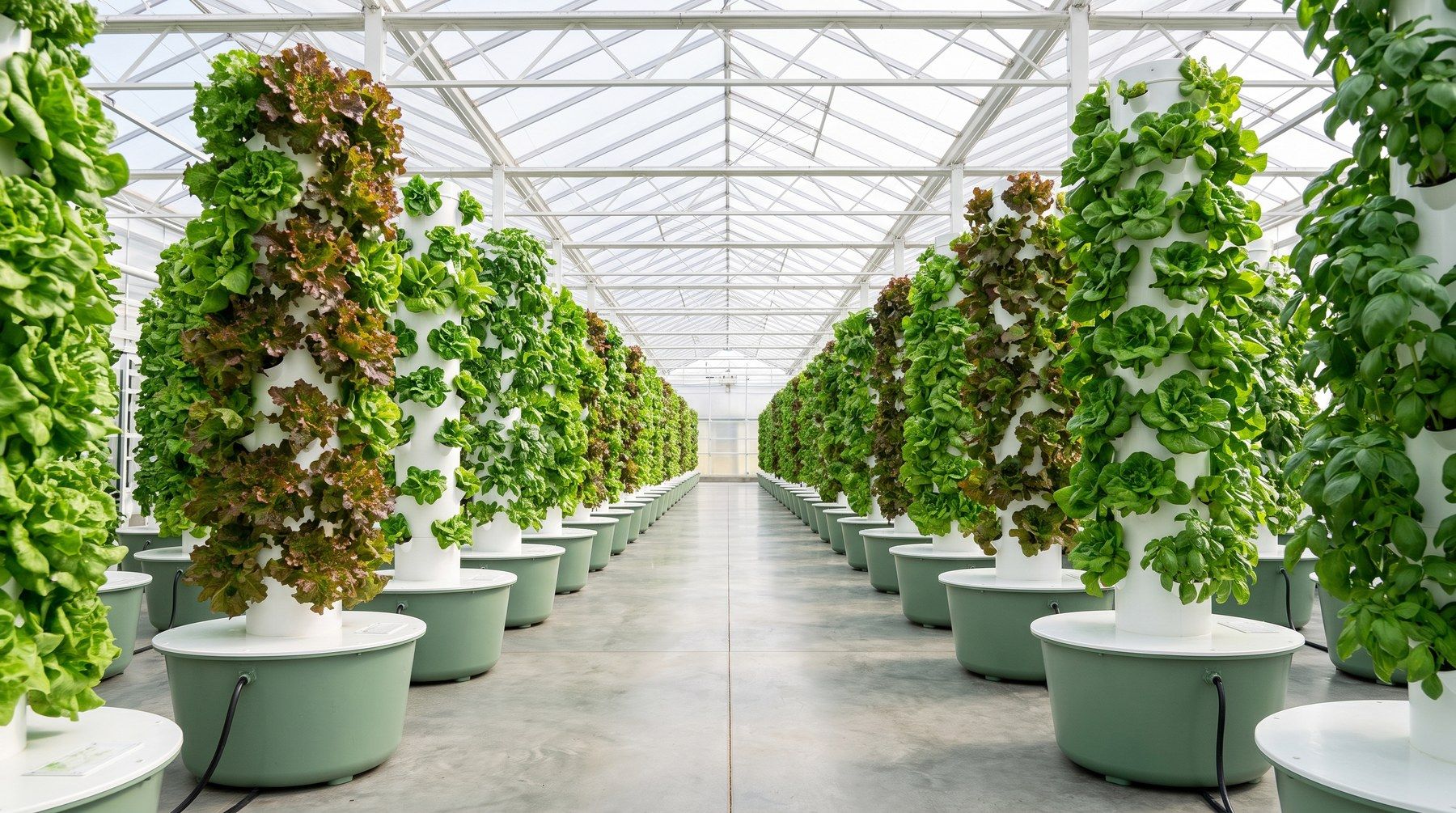
Soilless growing removes any dependence on the soil's available water. The plant receives water and nutrients directly at its roots, under cover that limits evapotranspiration, shades the crop during the hottest hours and protects it from hail. Yield then ceases to be a weather lottery.
This method of production obviously does not settle everything, since it calls for energy and a higher investment than open-field farming. It does deliver, on the other hand, genuine water efficiency and consistency of harvest, which are the conditions for a true adaptation to climate change.
Aquaponics, an answer that addresses water and temperature together
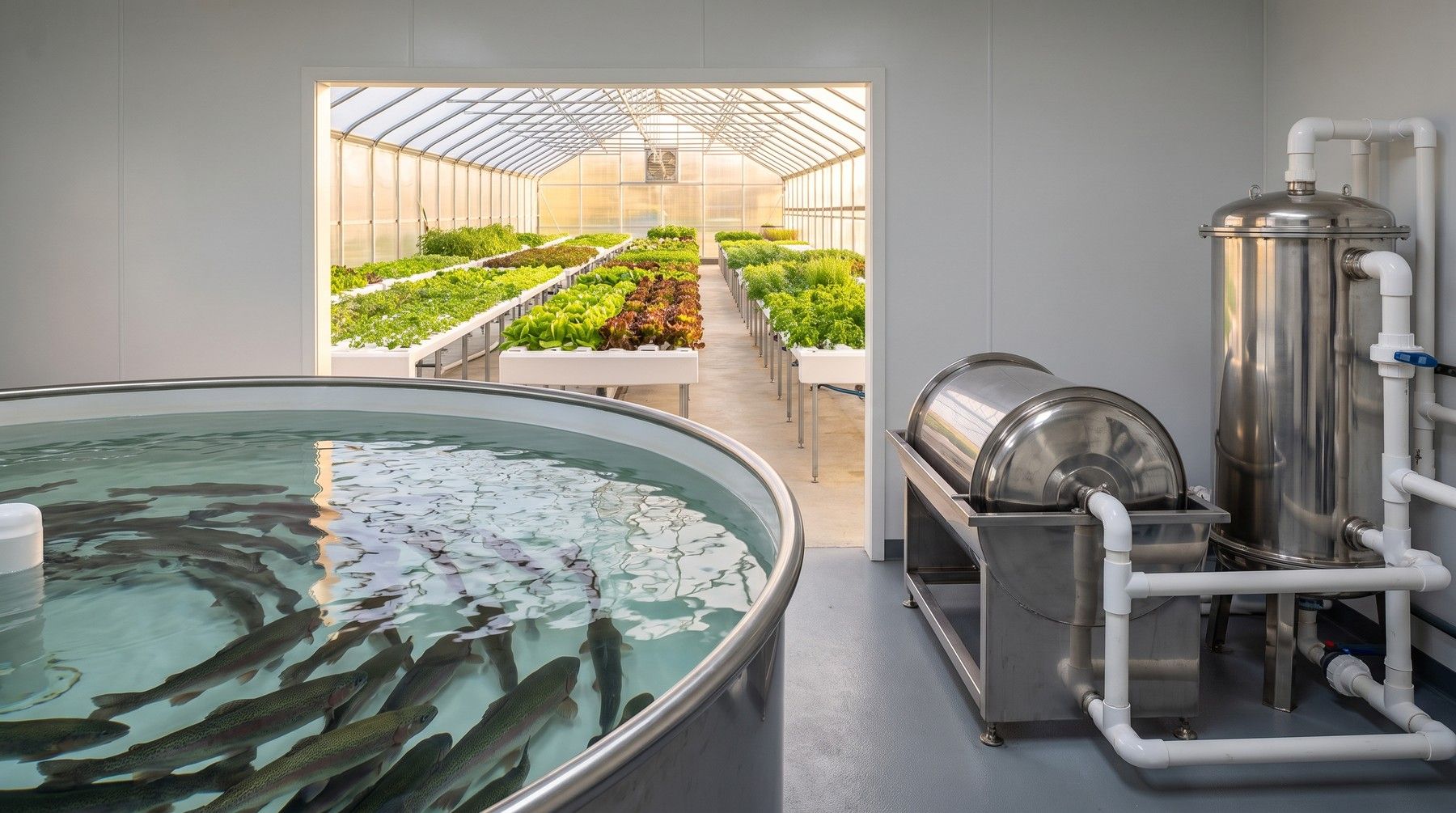
Aquaponics goes further, by combining fish farming and soilless vegetable growing within a single closed loop. The fish release ammonia, nitrifying bacteria in the biofilter turn it into nitrites and then into nitrates, and the plants take up those nitrates while purifying the water, which returns to the tanks. This mechanism, known as the nitrogen cycle, forms a genuinely virtuous circle, set out in detail in Aquaponics, how does it work?.
The water balance then changes in nature. The water circulates in a loop and is no longer lost to infiltration or run-off, the only volume to be made up being what evaporates or leaves with the filtration sludge. An aquaponic farm thus recycles around 95% of its water, and uses ten times less water than a soil-grown crop for the same quantity of vegetables, according to the reference figure used by the FAO.
This is precisely where the most important point lies. A closed loop makes it possible to control the temperature of the water and to oxygenate it permanently. The water is cooled by heat pumps, which consumes electricity but guarantees cool and stable water, between thirteen and sixteen degrees for rainbow trout and brook trout, and between twenty and twenty-three degrees for pikeperch, which is kept in a separate unit.
That cool water then benefits the greenhouse, since it is what feeds the crops. Vegetable growing is therefore doubly protected, by the cover that shades it and by tempered water that does not follow the swings of the weather. A heatwave no longer dictates the survival of the stock or the harvest calendar, and nothing is discharged into the natural environment.
The presence of the fish rules out any synthetic treatment, so that production is necessarily free of pesticides and antibiotics and is carried out without synthetic fertiliser, at the heart of sustainable farming. We compare it with the other soilless techniques in Aquaponics, hydroponics, aeroponics: what are the differences?.
Our aquaponic farm at Vic-sur-Seille
This farming, resilient in the face of global warming, is precisely what we are developing at Aquaponeasy, by taking commercial aquaponics to a large scale. Our aquaponic farm project will cover one hectare at Vic-sur-Seille, in the Moselle, and will bring together three fish halls, four production greenhouses, a research greenhouse and a processing workshop.
There we will raise rainbow trout, brook trout and pikeperch, alongside lettuces, herbs and salad leaves, precisely the crops that the summer of 2026 treated most harshly. The farm will aim for close to 75 tonnes of marketable production a year, including 40 tonnes of fish, sold through short supply chains within a radius of 100 kilometres in Lorraine and the Grand Est.
The land is secured, construction will begin in 2027, and the project has received support under France 2030 while a funding round is accompanying its financing. To find out more, explore the farm area by area or get to know the team who will run it.
So how will French agriculture adapt?
Open-field farming will remain the backbone of national production, and agronomic levers will win it a welcome margin. For the most fragile crops, however, these efforts will not be enough once low-water flows have declined further.
That is the reason why part of vegetable production and of fish production will soon be grown in aquaponics, as a complement to open-field crops rather than in their place. This technique protects crops from heat and frees production from water shortage, which makes it an answer to the needs that open-field farming will no longer be able to cover on its own.
The issue goes well beyond the question of yield alone. We already produce little in relation to what we consume, and that production is subject to the vagaries of the climate, which deepens our dependence on imports. The goods that fill this gap are often of lesser quality, in taste as in environmental impact, and it is the food self-sufficiency of local areas that recedes accordingly. The agricultural transition will also be decided on this ground.
The reasoning holds well beyond our borders. The scarcity of water makes local production indispensable on almost every continent, and many countries are seeing their populations grow faster than their harvests. The farm that we will build is, in that respect, a replicable model of the farming of tomorrow.
See what our farm will look like→
Frequently asked questions
Which crops suffered most from the 2026 drought?
The crops hit hardest were those with a short cycle and a continuous need for water, first among them market gardening. The Légumes de France federation estimated losses at between 25% and 30%, with far more severe situations still on certain batches of lettuce, salad leaves and leeks. Freshwater fish farming, for its part, saw mortalities directly linked to the heat.
Why do lettuce and tomatoes cope so badly with heatwaves?
A lettuce deprived of water bolts and no longer forms a marketable head, which is an irreversible loss for the grower. In tomatoes, the flowers burn and abort beyond 35 degrees, so that the harvest is removed before it has even begun to form. In both cases, a few days of intense heat are enough.
At what temperature does water become dangerous for a trout?
A rainbow trout stops feeding at around 19 degrees, enters distress between 23 and 24 degrees, and mortality becomes massive beyond 25 degrees. This effect is compounded by water chemistry, because warm water holds less dissolved oxygen at the very moment when the fish requires more of it.
Are sea-based salmon farms affected by warming?
They are affected directly. A salmon reared in a cage lives in water whose temperature and oxygen content no one controls, and the heat comes on top of high densities and parasite pressure. This combination explains the steadily rising mortality rates recorded in recent years in the Norwegian industry.
Are vegetable growers exempt from water restrictions?
They benefit from genuine arrangements, because market gardening, horticulture and protected crops most often figure among the priority crops, with adjusted irrigation time slots and the possibility of individual exemptions. These measures nevertheless move watering around within the day without adding anything to the volume of water available.
Is irrigation enough to protect a vegetable crop from a heatwave?
It is not enough, because irrigation addresses the lack of water without changing anything about the excess heat. An irrigated plot remains exposed to 38 degrees, and the tomato flower aborts all the same. Irrigation is moreover restricted at the very moment when the plant would need it most.
Can an aquaponic farm keep producing during a heatwave?
That is very precisely the point of this method of production. The greenhouse shades and protects the crop, while the closed loop makes it possible to cool the water with heat pumps, to keep it within the temperature range suited to each species and to oxygenate it continuously. This cool water then feeds the crops, which protects the vegetable side as well.
Can aquaponics replace open-field farming?
It cannot, and that is not its aim. Open-field farming will remain the backbone of national production, in particular for cereals and for livestock. Aquaponics comes alongside it, for the crops most fragile in the face of heat and water shortage, namely fresh vegetables and fish.