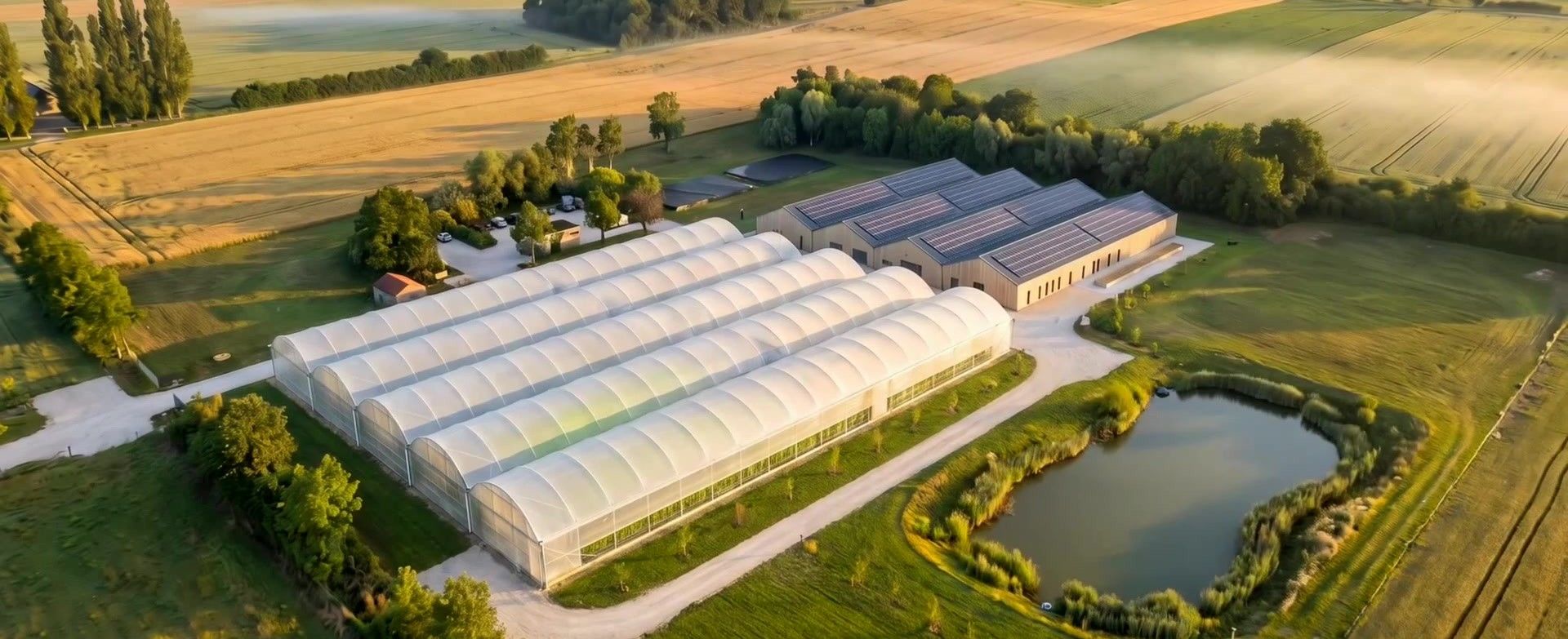
Aquaponeasy, a large-scale aquaponic farm in Vic-sur-Seille, Moselle

Feeding the world is draining the planet

Fresh water is already running short

1 in 3 Europeans is affected by water shortages every year, on the fastest-warming continent in the world.

70% of the world's freshwater withdrawals go to agriculture, and much of that water comes back polluted or salinised,
and therefore unusable.

Sources: European Environment Agency · Copernicus · FAO

Soils are degrading

1/3 of the world's soils are degraded by pesticides, loss of organic matter and drying out.

Source: FAO

The seas are emptying

38% of fish stocks are overfished, and the farming meant to ease that pressure weighs heavily on the environment and pollutes the oceans.

Source: FAO, SOFIA 2026 report

It starts here

It is in Vic-sur-Seille, in the Moselle,
in north-eastern France,
that we are building our pilot farm.

You can still take part in the project!

Our fundraising round is still open,
and you can still invest in the company.
Construction should begin in early 2027.

Take part in the project

At Aquaponeasy,
we are taking action!

Our mission: to develop a form of agriculture that is healthy, sustainable and adapted to climate change, through aquaponics

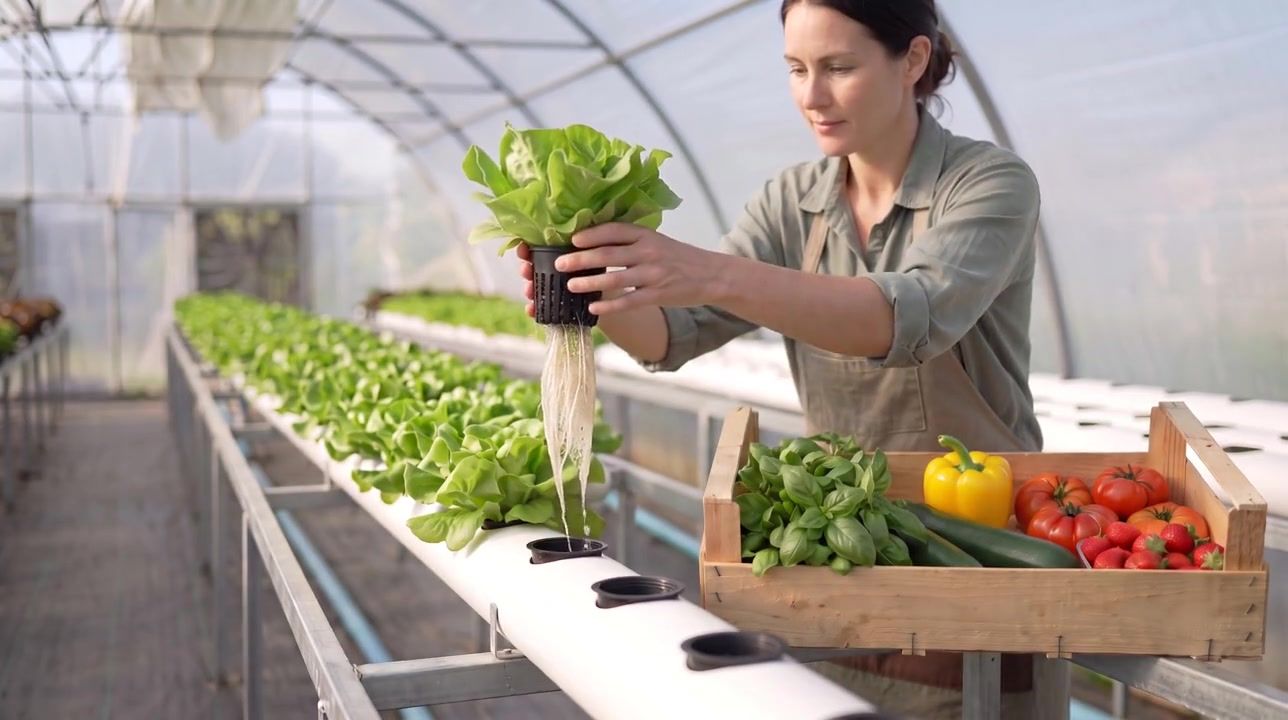
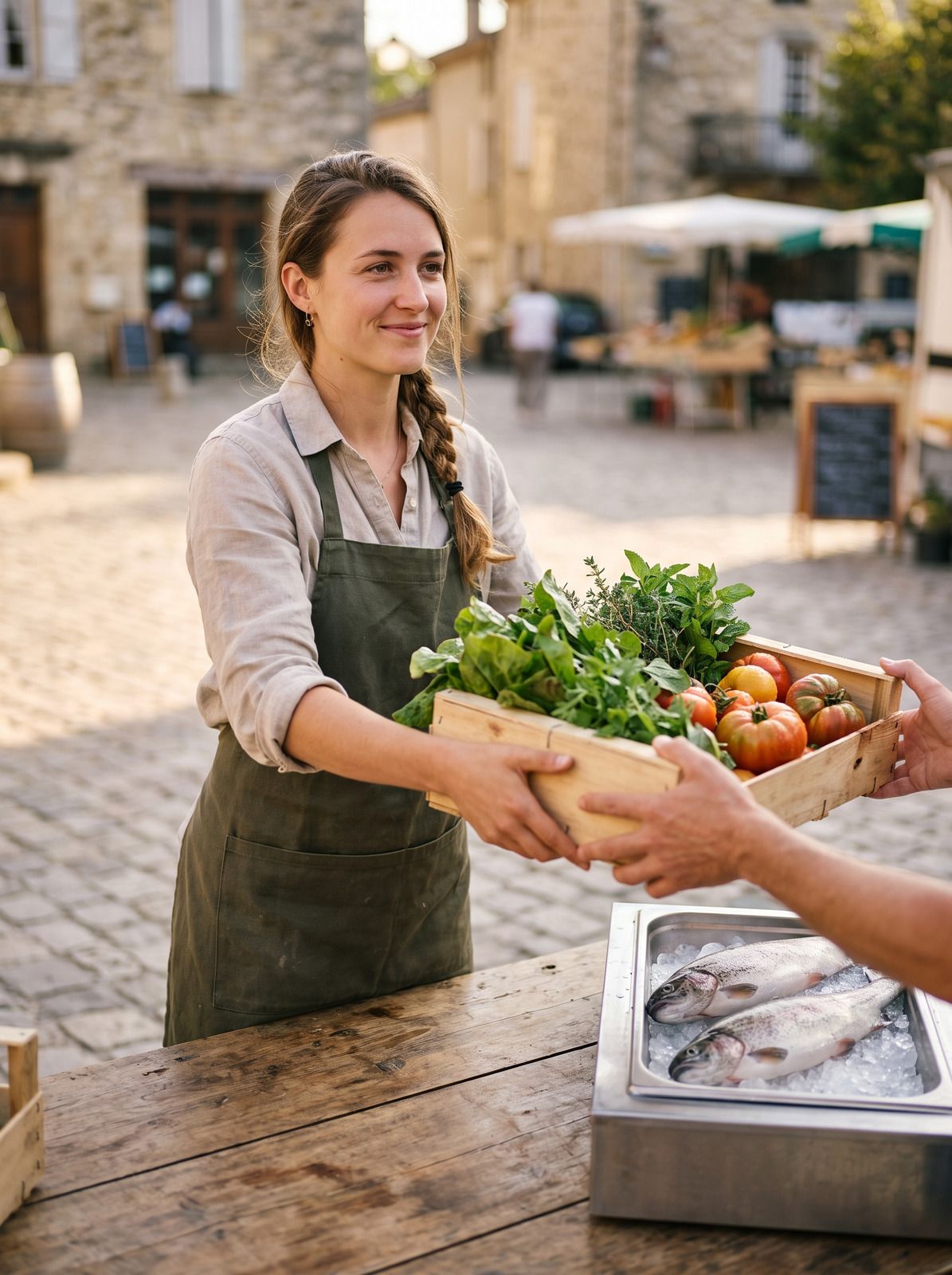
Handing over a crate of fresh produce from the aquaponic farm

Few agricultural technologies change the equation as much as aquaponics. Still little known, it nonetheless addresses several of the major dead ends facing global agriculture.

Our mission is to develop it on a large scale, so that it reaches its full potential and truly makes a difference. In doing so, we make healthy, sustainable and local food accessible to as many people as possible.

Eating fish, fruit and vegetables grown close to home, with real flavour, free of pesticide and antibiotic residues and of known origin, that is our promise, through a farm model adapted to climate change that protects our water, our soil and our ecosystems.

Finally, we want to welcome people and pass on what we know, because we only defend well what we understand. Everyone will be able to see how their food is grown and leave knowing what is on their plate.

How does aquaponics work?

The fish are fed

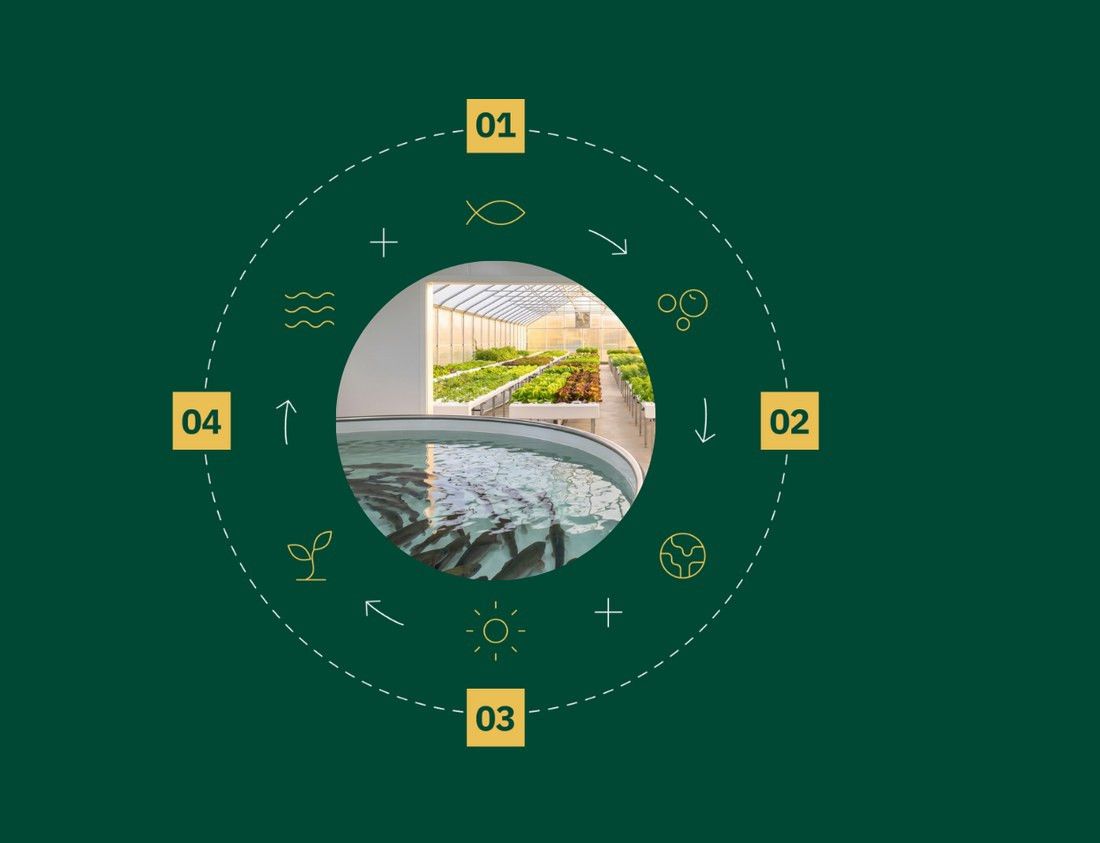
1.The fish are fed

The fish are fed several times a day with feed suited to aquaponics and to closed-loop production. Their waste loads the water with ammonia. Rather than discharging this water into the natural environment or into the sewer network, we keep it and give it a second life.

The water is filtered

2.The water is filtered

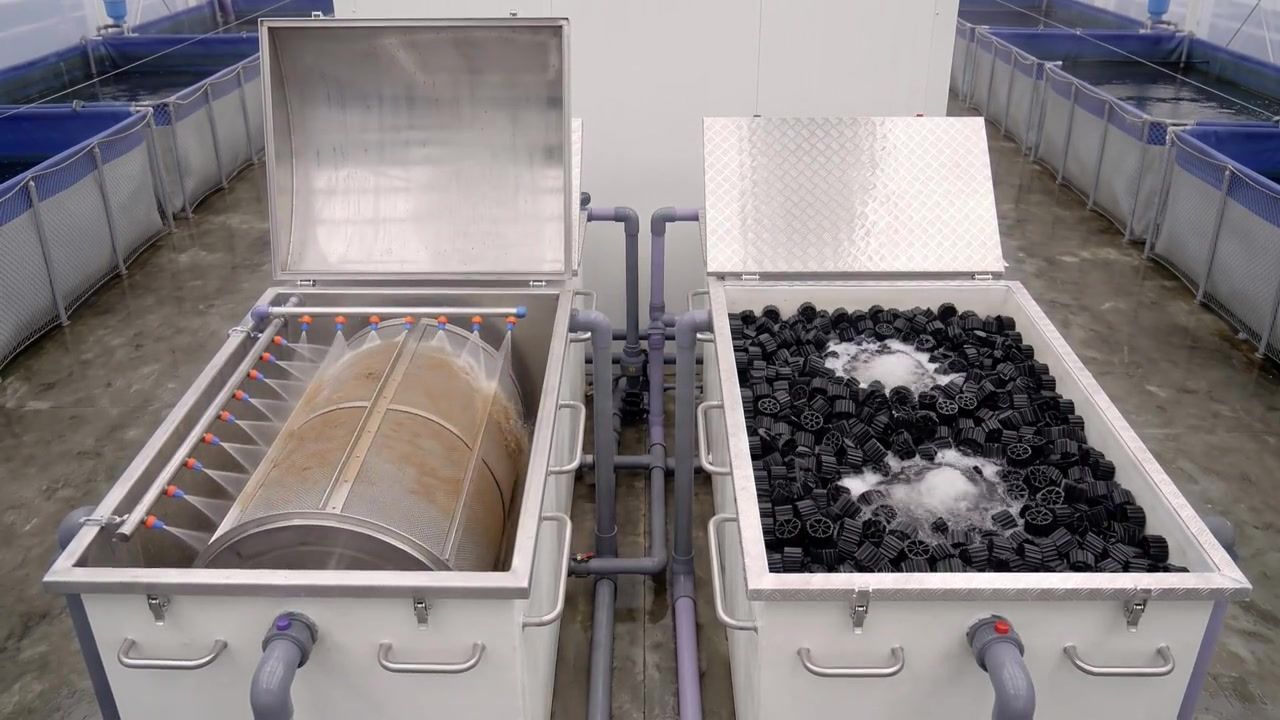
The drum filter first retains solid matter. The biofilter, home to the most valuable bacteria in the system, then takes over. These bacteria turn ammonia into nitrates, a nutrient that plant roots can feed on. An ultraviolet treatment makes the water safe before it returns to the tanks.

The plants purify the water

3.The plants purify the water

The roots take up the nitrates, the nutrients and the water that plants need to grow. At the end of the line, we recover clean water that flows back to the tanks. In this way, 95% of the fish farm's water is recycled, with no discharge into the natural environment.

The aquaponic loop in four stages, from feeding the fish to the return of clean water to the tanks The fish are fed and release waste into the water The water is naturally filtered by bacteria before reaching the plants The plants grow thanks to sunlight and the fish water, and their roots purify it The clean water is returned to the fish

Nothing is lost, everything feeds something.

The principle is nothing new. The Aztecs already grew crops on chinampas, the floating gardens of the Mexican lakes, and the rice paddies of Asia have combined rice growing and fish farming for more than a thousand years. What our era brings is fine control of the loop and its parameters, which makes it possible to industrialise this growing technique.

Fish release nitrogen in two ways: as ammonia (NH₃) excreted continuously through the gills, and as solid waste that releases more as it breaks down. In the biofilter, two families of bacteria work in sequence. Nitrosomonas oxidise ammonia into nitrites (NO₂⁻), which are toxic, and Nitrobacter immediately convert those into nitrates (NO₃⁻), which are harmless and available to plants. This nitrification is what makes the whole thing possible. It takes three to six weeks to establish the bacterial colony before the first fish can be introduced.

The real balancing act is pH. Fish are comfortable around 7, nitrifying bacteria work best towards 7.5 and plants absorb best between 5.5 and 6.5. None of these optimums coincide, and the consensus sits around 6.8, a compromise that allows everyone to thrive. Temperature, dissolved oxygen and the ratio between the amount of feed distributed and the growing area follow the same logic of constant trade-offs.

On the plant side, the roots do not take up nitrates alone. The phosphorus, potassium, calcium, magnesium and trace elements supplied by the feed are absorbed too. Two elements are generally missing in this kind of system, though: iron and potassium. To avoid any deficiency, they are added directly to the water in an available form, without upsetting the rest of the system.

As for the sludge captured by the filter, it can be reused. Vermifiltration turns it into an organic fertiliser that goes back to the crops, under glass and in open fields alike. The only loss in the system is therefore the water used through evapotranspiration and the maintenance purges.

9 reasons to develop aquaponics on a large scale

Aquaponics answers both the dead ends of conventional farming and what consumers are asking for today.

1

Year-round production

Under greenhouse and in a controlled environment, production is far less affected by weather and seasons. Harvests become regular, plannable, and adjust to demand. We have chosen to run the farm without heating or lighting, but it remains possible to use waste heat from neighbouring industrial activities to produce even more.

2

Growing guaranteed free of pesticides

The loop is closed and holds living fish as well as highly sensitive bacteria. No chemical treatment is possible without destroying the whole system. Aquaponics is a guarantee in itself.

3

Up to 95% of water recycled

The water circulates in a loop between the tanks and the crops. Where conventional farming draws continuously, we reuse almost the entire volume.

4
Soilless, even on degraded land

Aquaponics is soilless cultivation. It does not depend on soil quality, so a farm can be set up on a brownfield site, a degraded plot or land with no agronomic value.

5

No erosion, no leaching

No ploughing, no inputs polluting the groundwater. The soils and the biodiversity around the farm are preserved, and the site can even be laid out to welcome them.

6

Two productions, one infrastructure

Fish and plants share the same water, the same energy and the same infrastructure. Two complementary revenue streams for a single investment, and a spread risk.

7
Higher yields per square metre

Aquaponics allows a better growing density, continuously optimal conditions and several production cycles a year. Our output is therefore markedly higher than in traditional open-field growing, all on a smaller land footprint.

8
Protected crops, secured production

Greenhouse growing protects crops as far as possible from weather hazards, from certain pests and from predators. Production is therefore more secure and more stable from one year to the next. The risks of contamination and disease are also reduced.

9

A model that can be replicated

Aquaponics adapts to most inhabited climates and comes in many forms. Cold-water or warm-water fish, temperate or tropical crops, a single crop or a broad range, and even production in brackish water.
1

Year-round production

Under greenhouse and in a controlled environment, production is far less affected by weather and seasons. Harvests become regular, plannable, and adjust to demand. We have chosen to run the farm without heating or lighting, but it remains possible to use waste heat from neighbouring industrial activities to produce even more.

2

Growing guaranteed free of pesticides

The loop is closed and holds living fish as well as highly sensitive bacteria. No chemical treatment is possible without destroying the whole system. Aquaponics is a guarantee in itself.

3

Up to 95% of water recycled

The water circulates in a loop between the tanks and the crops. Where conventional farming draws continuously, we reuse almost the entire volume.

4

Soilless, even on degraded land

Aquaponics is soilless cultivation. It does not depend on soil quality, so a farm can be set up on a brownfield site, a degraded plot or land with no agronomic value.

5

No erosion, no leaching

No ploughing, no inputs polluting the groundwater. The soils and the biodiversity around the farm are preserved, and the site can even be laid out to welcome them.

6

Two productions, one infrastructure

Fish and plants share the same water, the same energy and the same infrastructure. Two complementary revenue streams for a single investment, and a spread risk.

7

Higher yields per square metre

Aquaponics allows a better growing density, continuously optimal conditions and several production cycles a year. Our output is therefore markedly higher than in traditional open-field growing, all on a smaller land footprint.

8

Protected crops, secured production

Greenhouse growing protects crops as far as possible from weather hazards, from certain pests and from predators. Production is therefore more secure and more stable from one year to the next. The risks of contamination and disease are also reduced.

9

A model that can be replicated

Aquaponics adapts to most inhabited climates and comes in many forms. Cold-water or warm-water fish, temperate or tropical crops, a single crop or a broad range, and even production in brackish water.
One hectare designed as a complete ecosystem

Aerial view of the Aquaponeasy aquaponic farm at Vic-sur-Seille Explore the 3D renders

0 ha

of farm area

0 t

of net food produced per year

0

full-time jobs planned per farm

Our future production

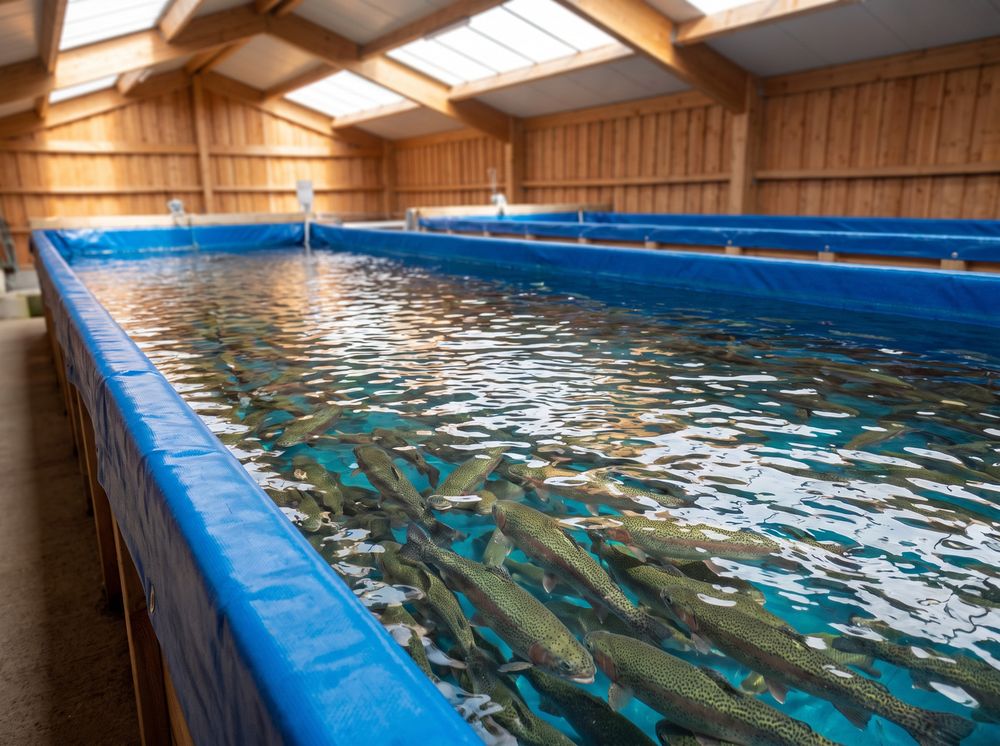
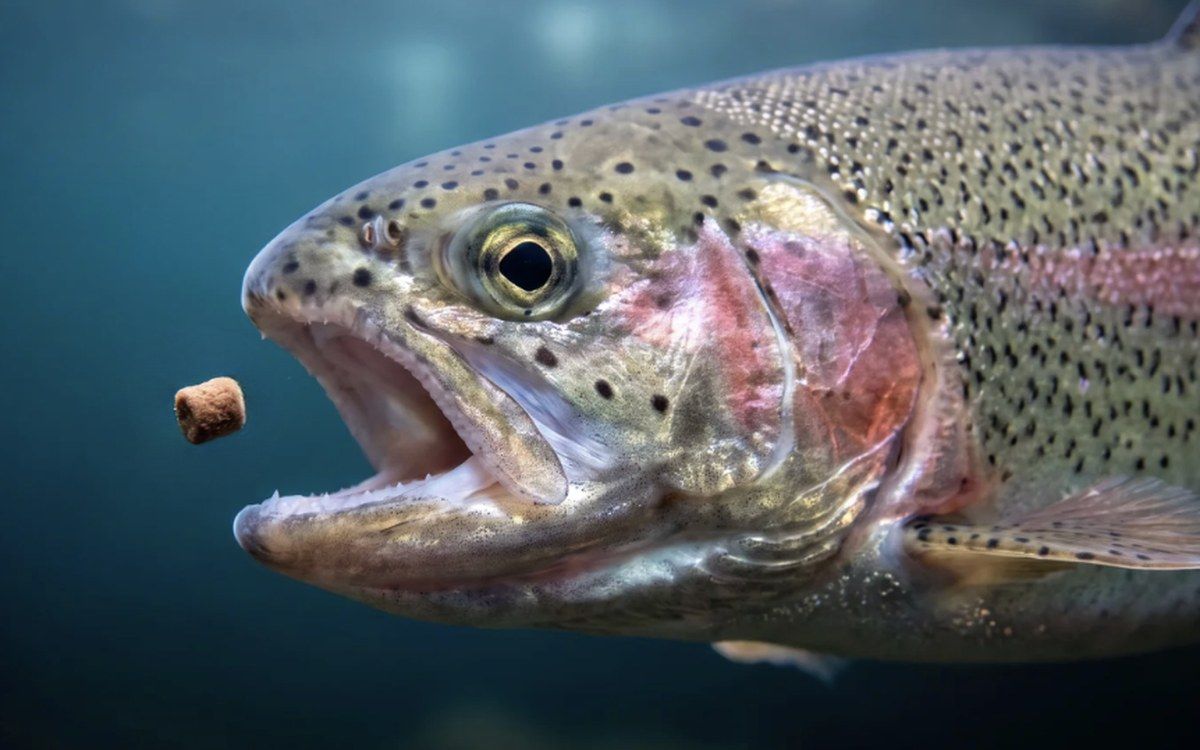
Rainbow trout swimming in an aquaponic rearing tank

Fish farming

Rainbow trout, brook trout and pikeperch, reared without antibiotics.
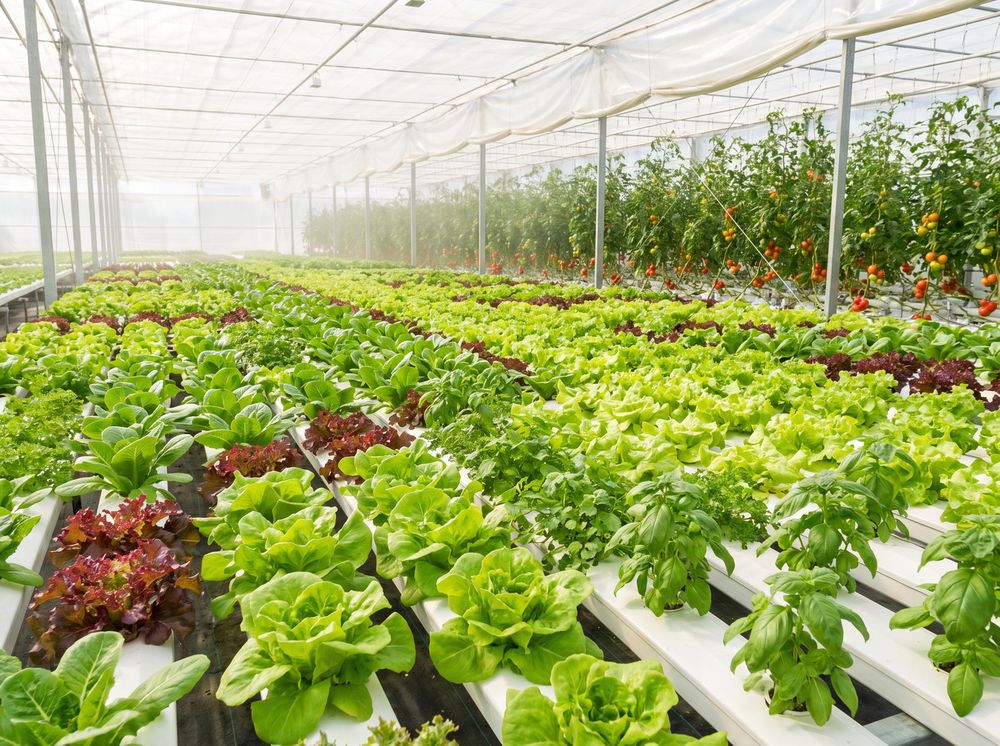
Rows of salad leaves and herbs growing in the aquaponic greenhouse

Market gardening

Fruit & vegetables, herbs, edible flowers and microgreens.

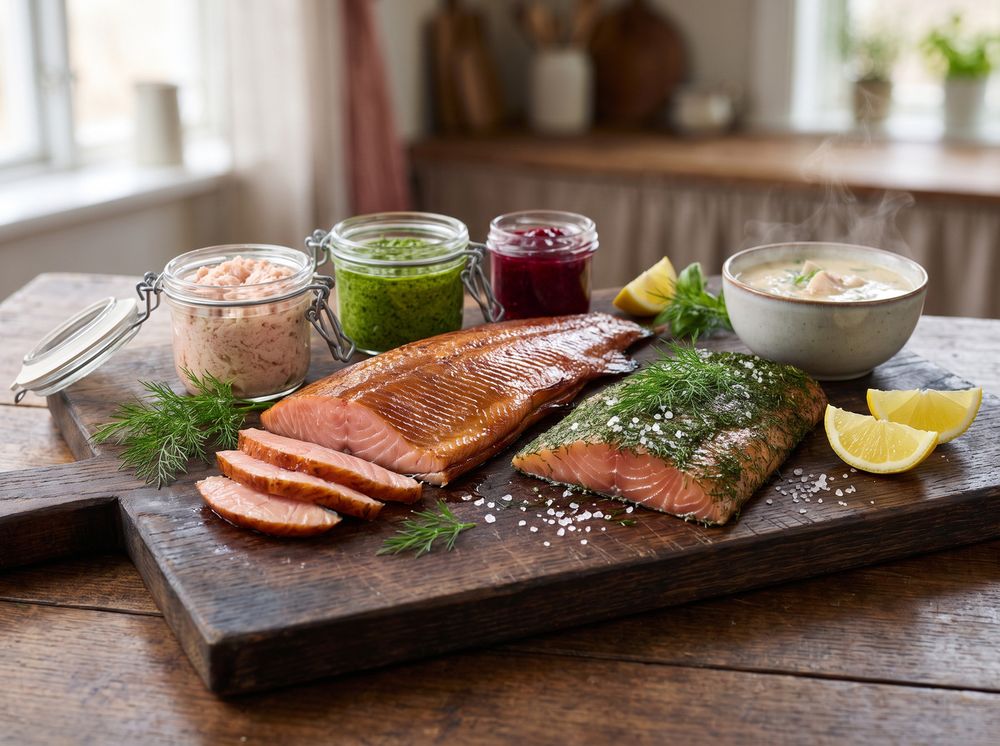
Smoked fillets, gravlax and preserves made at the farm

Processed products

Smoked fillets, gravlax, soups, rillettes, jams, pesto and many more…

A project aligned with the UN goals

Aquaponeasy is a project committed by its very nature. Aquaponics, and the way we are developing it at scale, allows us to act concretely on thirteen of the seventeen Sustainable Development Goals set by the UN.

Click each goal to see how we are taking action

Sustainable Development Goal 2: Zero Hunger
Sustainable Development Goal 3: Good Health and Well-being
Sustainable Development Goal 4: Quality Education
Sustainable Development Goal 5: Gender Equality
Sustainable Development Goal 6: Clean Water and Sanitation
Sustainable Development Goal 7: Affordable and Clean Energy
Sustainable Development Goal 8: Decent Work and Economic Growth
Sustainable Development Goal 9: Industry, Innovation and Infrastructure
Sustainable Development Goal 11: Sustainable Cities and Communities
Sustainable Development Goal 12: Responsible Consumption and Production
Sustainable Development Goal 13: Climate Action
Sustainable Development Goal 14: Life Below Water
Sustainable Development Goal 15: Life on Land

There is still time to take part

Our fundraising round is still open. We are aiming to close it at the end of 2026, and that is what will let us start building the farm in early 2027. You can still invest from €5,000 in our project, in the operating company as well as in the farm property.

Join the round

Our partners

Grand Est Region Moselle, l'Eurodépartement Eurométropole de Metz Communauté de communes du Saulnois Town of Vic-sur-Seille University of Lorraine Bpifrance logo, financial partner of the project France 2030 logo, the national investment programme backing the project La French Tech Est MOSL Attractivité Réseau Initiative Moselle Sud Rotary logo, supporter of the Aquaponeasy project Crédit Agricole de LorraineLe Village by CA Moselle Chamber of Agriculture Bioponi logo, technical partner in aquaponicsHydrOccitanie Univers Aquaponie